Introducing Anthropic's Model Context Protocol
Anthropic's MCP launch post shows why AI apps stay blind to your data — every integration was custom — and how one open protocol replaces them all.
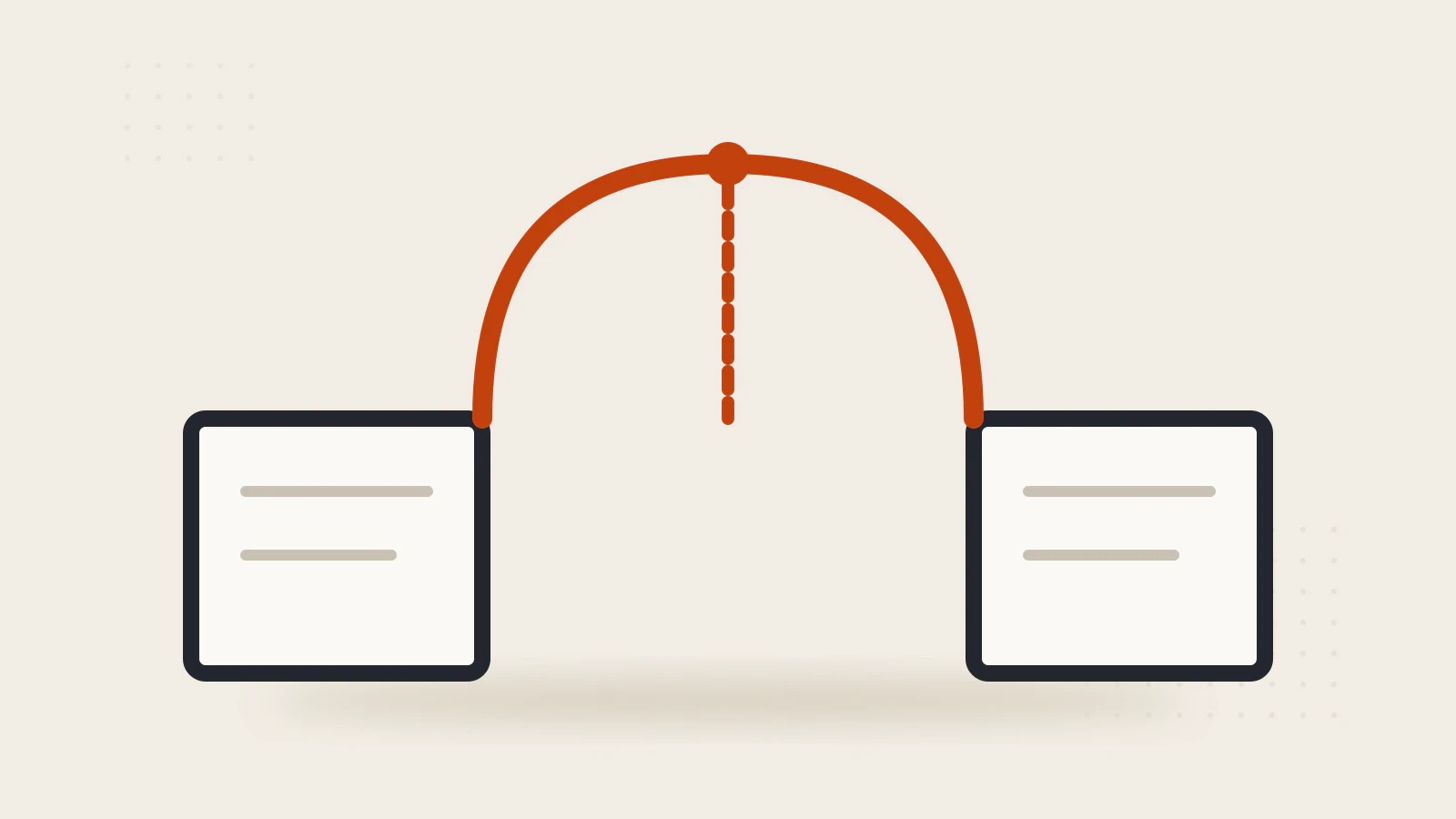
The wall between an AI assistant and a company’s data was never mainly about model intelligence. Every connection — to the wiki, the tickets, the database — had to be built by hand, once per app, once per system. Anthropic’s November 2024 answer was not a smarter model; it was a protocol.
Source
Introducing the Model Context Protocol
By: Anthropic (David Soria Parra and Justin Spahr-Summers)
Published: Nov 25 2024
Type: Product announcement
This is worth keeping because it names the problem and ships the fix as a specification instead of a feature: models were “trapped behind information silos and legacy systems,” and no amount of reasoning quality fixes a connection that doesn’t exist. It also reads as engineering history — the server/client split introduced here is still how AI applications reach data today.
How MCP collapses the integration matrix
The post starts with an awkward admission. Through 2024 the industry had poured effort into model capability, and reasoning had genuinely improved — yet assistants stayed cut off from the content repositories, business tools, and development environments where real work lives. Anthropic’s diagnosis: every new data source needed its own custom implementation, so connected systems couldn’t scale no matter how good the model got. The constraint sat between the model and the data, not inside the model.
The Model Context Protocol is the proposed exit. It’s an open standard for building secure, two-way connections between data and AI tools, and the simplest mental model is a division of labor: systems expose themselves as MCP servers, and AI applications act as MCP clients that connect to those servers. Neither side needs to know anything about the other beyond the protocol.
Three things shipped on day one: the specification with SDKs, local MCP server support in the Claude Desktop apps, and an open-source repository of servers. Pre-built servers arrived for Google Drive, Slack, GitHub, Git, Postgres, and Puppeteer. A detail worth pausing on: the post notes Claude 3.5 Sonnet was adept at writing MCP server implementations quickly. That’s a quiet statement about the protocol’s size — if a model can implement it in one pass, a platform team certainly can.
Adoption signaling follows. Block and Apollo had already integrated MCP, while Zed, Replit, Codeium, and Sourcegraph were building with it so their coding agents could pull in the context around a task. Block’s CTO put the ambition in one line: “Open technologies like the Model Context Protocol are the bridges that connect AI to real-world applications.” The dev-tool makers matter most here, because they already lived with the integration problem daily — which is usually where a new standard gets its first real test. That’s my observation, not the post’s.
The economic argument takes one sentence in the post — build against a standard protocol instead of maintaining separate connectors — but the consequence is arithmetic. In my example, ten assistants each integrating with thirty systems means 300 bespoke connectors; with a protocol, it’s forty implementations, one per participant. The closest precedent, though the post doesn’t mention it, is the Language Server Protocol, which collapsed the same explosion in editors and programming languages. The payoff also compounds: as the ecosystem matures, an AI system carries its context across tools and datasets instead of losing it at every app boundary.
What you could actually do at launch was narrower than the vision. All Claude.ai plans could connect MCP servers inside the Claude Desktop app, and Claude for Work customers could point those servers at internal systems and datasets. Remote, production-grade server deployment was promised but not shipped — the post’s “we’ll soon provide developer toolkits” is doing real work in that sentence. The launch was desktop-local first.
The closing section names the creators, David Soria Parra and Justin Spahr-Summers, and commits to building MCP as a collaborative open-source project. That openness is strategy, not charity — my read, not theirs. A protocol only matters if competitors adopt it, and a standard used by one vendor is just an API with extra steps. Giving it away was the way to make every newly connected system available to Claude.
Two cautions belong alongside the enthusiasm. This is a launch announcement, so the adopter list is the vendor’s own selection, and “early adopter” means “willing to be named.” And the protocol solves connection plumbing, not quality — a poorly built server hands an agent bad context just as efficiently as a good one hands over clean data.
The common misunderstanding is filing MCP under “Anthropic product.” The post is explicit that it’s an open standard, with SDKs, an open repository, and an open invitation to other AI tool developers to build clients and servers. Claude was the first consumer, not the point of the protocol.
My take
Read this as an economics document, not a product note. The admission at its core is that model quality had outrun connection plumbing, and that no single vendor could keep building integrations one by one — so the seam between models and data got standardized, which turns integration from a moat into a commodity. What you can’t see from the post alone is that the direction of work inverts. Under the usual pattern, each assistant vendor builds and maintains connectors into your systems. With MCP, the data owner exposes one server and every capable client consumes it — control, and the integration effort, move to whoever owns the data. That inversion explains who shows up in the adopter list: enterprises and dev-tool makers benefit, while anyone selling integration as a service doesn’t. The honest limitation is that announcements understate friction. Authentication, deployment, and server quality are where the real work landed after launch, and the post’s own “we’ll soon” hedges mark exactly those spots.
Where this is useful
- Building an internal assistant that needs several systems — expose each once as a server, and every MCP-capable client benefits instead of just one app.
- Building developer tools where agents need repository, issue, or documentation context — the move Zed and Sourcegraph made.
- Deciding whether to write your third custom connector by hand or check whether a server already exists.
- One assistant, one data source, no reuse planned — a direct integration is simpler than operating a protocol.
Apply this: Pick one internal system your AI tool can’t see today and sketch it as a server — what it exposes, who holds the credentials, what a bad request looks like. That sketch is the honest test of whether the protocol earns its place over another custom connector.
What I want to remember
Remember: The integration problem is arithmetic — N apps times M systems of bespoke connectors collapses to N plus M implementations once a protocol exists. Expose the data once as a server, and every capable client can use it.